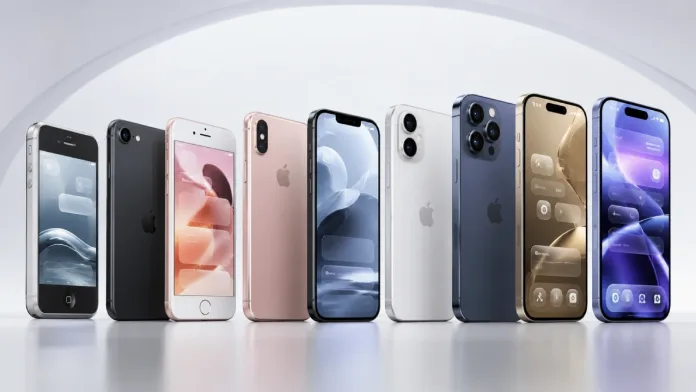



Apple has once again found a very Apple-like way to capture media attention without rolling out its usual big-stage production. At the end of February, Tim Cook posted a simple teaser announcing a “big week ahead”, with new products starting Monday, March 2, 2026. No global keynote, no huge stage, no perfectly timed “one more thing”: just a week of announcements, press releases, product videos and hands-on coverage.
And honestly, that might be the most interesting part. Apple seems to be accepting that some launches no longer need a full event. When the goal is to refresh several product lines at once, it sometimes makes more sense to spread the announcements over a few days rather than squeeze everything into a one-hour presentation. The result is simple: every product gets more breathing room, every announcement gets its own moment, and the media cycle lasts longer.
A packed week, not just a minor refresh
We now know exactly what Apple had lined up: iPhone 17e, MacBook Neo, MacBook Air with M5, MacBook Pro with M5 Pro and M5 Max, iPad Air with M4, a new Studio Display and Studio Display XDR. All these products later became available in Apple Stores and through Apple’s online store starting March 11, 2026.
On paper, it sounds like a flood of announcements. In practice, the strategy is fairly easy to read: Apple is filling gaps in its catalog. A more affordable iPhone, a more accessible Mac, more powerful MacBooks, an iPad Air better equipped for AI, and new displays for users who want to stay inside the Apple ecosystem. Not every line is spectacular, but the whole picture makes sense.
The iPhone 17e confirms a new rhythm
The iPhone 17e is probably the most mainstream product in this wave. Apple positions it as the more affordable member of the iPhone 17 family, with an A19 chip and the C1X modem, presented as up to twice as fast as the C1 used in the iPhone 16e.
What this model really tells us is that the old iPhone SE era, refreshed whenever Apple felt like it, seems to be over. With the 16e and now the 17e, Apple is setting up an annual rhythm for its premium entry-level iPhone. This is not a “cheap” iPhone. It is a more rational iPhone. For many users, it may even be the best balance: modern enough, compatible with the newest software features, but less intimidating in price than the Pro models.
MacBook Neo is the real strategic signal
The MacBook Neo is, in my view, the real surprise of this product wave. Apple describes it as a MacBook with a 13-inch Liquid Retina display, aluminum body, A18 Pro chip and a starting price of €699 in France.
That choice is clever. Putting an iPhone-class chip into a Mac may sound odd to purists, but for students, families and everyday productivity, it makes a lot of sense. Web browsing, email, streaming, writing, video calls, light photo editing: these are exactly the kind of tasks where Apple Silicon already shines thanks to its efficiency.
The MacBook Neo is not meant to replace a MacBook Pro. It is designed to bring more people into macOS. For Apple, that may be more valuable than a monster spec sheet.
iPad Air and Mac move deeper into the AI era
The iPad Air with M4 follows the same logic: Apple is pushing its mid-range devices toward performance levels that used to be reserved for premium products. With the M4 chip, Apple highlights faster CPU and GPU performance, stronger AI capabilities and a more ambitious iPadOS 26 experience.

On the MacBook Pro side, the M5 Pro and M5 Max chips are clearly aimed at heavy workloads: local AI, language models, video creation, 3D rendering and professional workflows. Apple claims up to four times higher AI performance than the previous generation in some tasks, which says a lot about where the company wants to take its pro machines.
This is not just a raw power contest. Apple wants its devices to handle more tasks locally, without sending everything to the cloud. For privacy, latency and creative workflows, that is a strong angle.
What this week really says about Apple
This launch week marks a quiet but important shift. Apple is not abandoning keynotes, of course. But it is proving that it can create a mini product storyline without stepping on stage.
My impression is that Apple is becoming more pragmatic. Big shows still make sense for the main iPhone lineup, major redesigns or entirely new platforms. For everything else, a week built around targeted announcements can be more effective. The public remembers the products more clearly, the media follows the story day after day, and Apple controls the tempo.
Less spectacular? Maybe. Smarter? Definitely.
FAQ
Which Apple products were announced in March 2026?
Apple introduced the iPhone 17e, MacBook Neo, MacBook Air M5, MacBook Pro with M5 Pro and M5 Max, iPad Air M4, Studio Display and Studio Display XDR.
Is the MacBook Neo an entry-level MacBook?
Yes, it is the most accessible MacBook in this new wave, designed to offer the Mac experience at a lower price, with an A18 Pro chip and a 13-inch Liquid Retina display.
Does the iPhone 17e replace the iPhone SE?
In spirit, yes. Apple now seems to be using the “e” lineup as the modern entry point into the iPhone world.
Why didn’t Apple hold a keynote?
Because these announcements worked well in a more flexible format: several press releases, several videos and attention spread across multiple days.

I'm Clémentine Pithon, and as a technology enthusiast, I write articles to guide you through the world of refurbished devices. My goal is simple: to help you make informed choices, understand the products, and get the most out of them every day. Tips, explanations, and practical advice are at the heart of my articles.