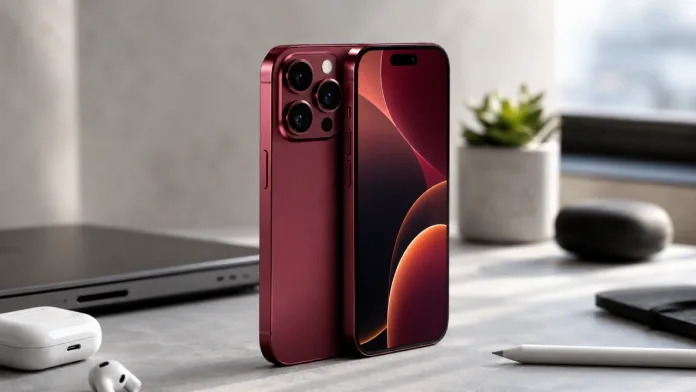



Apple has not made anything official yet, but the first foldable iPhone already looks like one of the most closely watched launches in years. Not only because it would be Apple’s first foldable smartphone. Mostly because this model, often referred to as iPhone Ultra in rumors, could arrive with a very Apple-like problem: huge demand, a very high price, and frankly tiny stock.
According to the latest supply chain estimates, Apple is aiming for a September 2026 unveiling alongside the iPhone 18 Pro models. On paper, it makes sense. Apple likes using its big fall keynote to introduce a new category, or at least to make it feel that way. The issue is that this first foldable iPhone may not be available like a regular iPhone.
Stock could disappear within minutes
The number that stands out is simple: Apple could assemble between 7 and 8 million units in the second half of 2026, but only 500,000 to 1 million devices may be ready in the third quarter. For a global Apple product, that is very little. By comparison, the iPhone 18 Pro and 18 Pro Max are expected to be produced in far more comfortable volumes during the same period.
That does not mean the foldable iPhone will be an industrial failure. Quite the opposite: this level of scarcity could also create a powerful desire effect. Apple knows this mechanism very well: announce loudly, let anticipation build, then manage frustration through delivery dates that keep slipping. We already saw this with the iPhone X in 2017, which was presented in September but actually launched later.
The difference this time lies in the complexity of the product. A foldable smartphone is not a “normal” iPhone with a hinge added in the middle. Apple has to manage thickness, durability, the internal display, the crease, battery life, heat, cameras, and the interface. It is exactly the kind of product where Apple would rather arrive late than give the impression of selling an overpriced prototype.
A price that would put iPhone Ultra in another category
Estimates point to a price between $2,300 and $2,500. Even for Apple, that is intense. This would no longer be just a very high-end iPhone Pro Max, but a hybrid object somewhere between an iPhone, an iPad mini, and a showcase product.
The expected format supports that idea: an external display of around 5.5 inches for quick interactions, then an internal screen close to 7.8 inches when opened. In other words, a pocket-sized iPhone that almost turns into a small tablet. The concept is appealing, especially for reading, video, light productivity, and multitasking. But at that price, Apple will have to deliver a flawless experience.
The real challenge will be the crease. Foldable smartphones have improved enormously, but Apple cannot afford a screen that looks like it is folding in the wrong place the moment you view it from an angle. Rumors insist on a nearly crease-free panel, with major work done on materials, the hinge, and the way mechanical stress is handled. That is probably where much of the delay and limited production volume comes from.
A shortage Apple may suffer from, but also benefit from
Let’s be honest: limited availability is not necessarily bad news for Apple. Commercially, an impossible-to-find foldable iPhone could instantly become a status symbol. The first units will likely sell out very quickly, delivery times could stretch to several weeks, and the resale market may have a field day if supply really is that tight.
But this scarcity could also protect Apple. A first foldable model priced above $2,000 is not aimed at the mass market. It will mainly be used to test real demand, observe usage habits, measure durability feedback, and prepare a second generation that is more accessible, or at least more mature.

The foldable market has been waiting for Apple for years. Samsung, Honor, Google, OPPO, and others have already done the hard early work. Apple arrives with a huge advantage: it does not need to be first to change how people perceive the product. If its foldable iPhone is convincing, it could make the format far more desirable to an audience that still sees Android foldables as expensive curiosities.
Final thoughts
At this stage, the foldable iPhone looks less like a simple new model and more like a large-scale test for the future of the iPhone. Apple seems ready to make a strong move, but without opening the floodgates too quickly. It is cautious, almost cold, but fairly consistent with the way the company launches a new category.
My impression: this first iPhone Ultra will be fascinating, probably impressive, but not necessarily rational. It feels like a first-generation product designed for enthusiasts, collectors, and people who want to be first. The truly mainstream foldable iPhone will probably come later. But the 2026 model could be the one that really starts the fight.
FAQ
When could the foldable iPhone be announced?
The latest rumors point to a September 2026 unveiling, probably alongside the iPhone 18 Pro models.
Why could it be hard to buy at launch?
Initial production volumes are expected to be very low, with only 500,000 to 1 million units available in the third quarter of 2026.
How much could it cost?
Estimates suggest a price between $2,300 and $2,500, which would make it the most expensive iPhone ever launched.
What format could it use?
Apple is reportedly aiming for a book-style design, with an external display of around 5.5 inches and an internal screen close to 7.8 inches when opened.

I'm Clémentine Pithon, and as a technology enthusiast, I write articles to guide you through the world of refurbished devices. My goal is simple: to help you make informed choices, understand the products, and get the most out of them every day. Tips, explanations, and practical advice are at the heart of my articles.